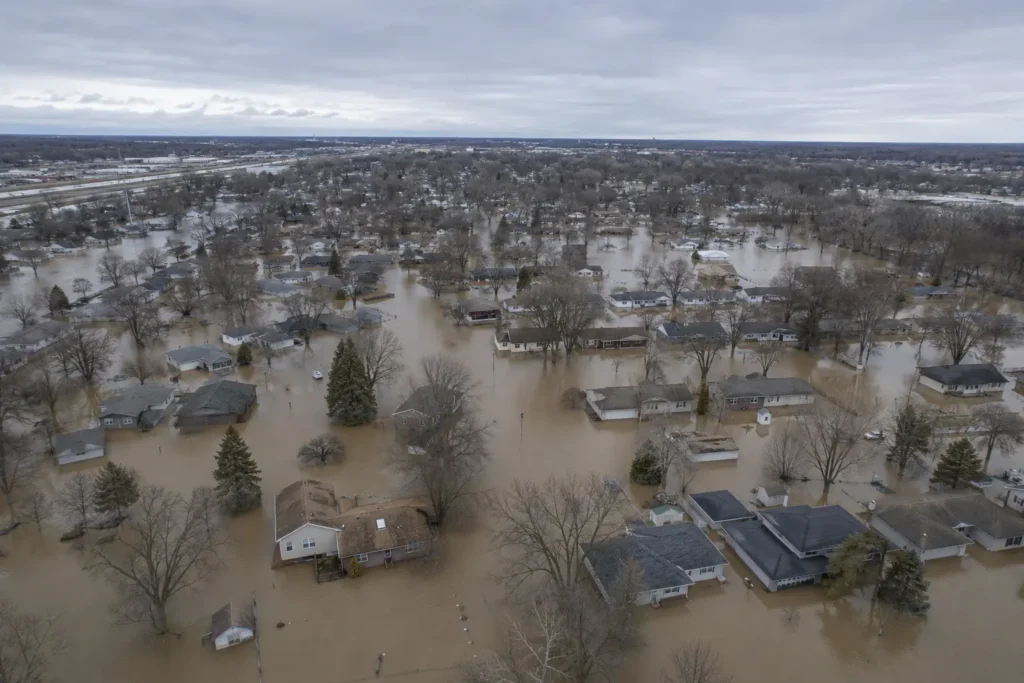
Living in Illinois comes with a lot of advantages – strong communities, affordable housing, and a central location that connects the entire Midwest. But it also means dealing with one of the most consistent threats homeowners face in this region: water damage.
Illinois sits along major river systems, receives heavy seasonal rainfall, and endures harsh freeze-thaw winters that put enormous stress on residential infrastructure. Whether you live near the Illinois River in Peoria, in the older neighborhoods of Rockford, or in the flood-prone areas of Springfield – water intrusion is not a distant possibility. For many homeowners, it is a recurring reality.
This guide covers the cities most at risk, why each one faces unique challenges, and what homeowners should do the moment water damage occurs.
Why Illinois Homes Are Particularly Vulnerable
Illinois receives an average of 35 to 40 inches of rainfall annually – and a significant portion of that falls in intense spring and early summer storms that overwhelm drainage systems quickly. Add in the Mississippi and Illinois River systems that border and run through the state – and you have a geography that naturally pushes water toward populated areas.
Older housing stock makes the problem worse. Many Illinois homes – especially in urban centers – were built before modern waterproofing standards existed. Clay sewer lines crack under ground movement. Foundation walls develop hairline fractures over decades. Sump pumps installed years ago fail under pressure during the storms that matter most.
According to the Illinois State Water Survey – central and northern Illinois consistently see above-average precipitation events during spring months – making early preparation critical for homeowners across the state.
The three cities below appear in water damage reports across Illinois every single year – and for good reason.
Peoria, IL – The Illinois River Factor
Peoria is one of the most flood-vulnerable cities in central Illinois. Its position along the Illinois River means that during spring snowmelt and heavy rainfall seasons – river levels can rise faster than municipal drainage systems can respond.
Peoria is one of the areas we serve across Illinois – along with Rockford, Springfield, and other high-risk cities throughout the state where river flooding and groundwater intrusion are seasonal concerns.
Neighborhoods built on lower ground near the riverbank face repeated basement flooding, crawl space saturation, and long-term structural moisture issues. Homes on elevated lots are not immune either – groundwater rises during extended rain events and finds its way through foundation walls, floor joints, and utility penetrations that homeowners rarely think about until they are standing in an inch of water.
What makes Peoria particularly challenging is the timeline. Many homeowners do not realize how serious the moisture problem is until mold appears – typically 48 to 72 hours after the initial water event. By that point – drywall, insulation, and subflooring may already be compromised and require full replacement rather than simple drying.
Spring and fall are the highest-risk seasons in Peoria. Sump pump inspections before March and again before October are one of the most effective habits a Peoria homeowner can develop.
If you are already dealing with flooding or water intrusion in your home – professional water damage restoration Peoria IL services are available around the clock – because water damage does not wait for business hours.
Rockford, IL – Storm Drains, Ice Dams, and Aging Infrastructure
Rockford sits in northern Illinois and faces a different – but equally serious – combination of water damage risks. The city’s storm drain infrastructure in several established residential districts was not designed to handle the volume and intensity of rainfall that has become increasingly common over the past two decades.
During major rain events – storm drains in parts of Rockford back up and push water into streets, yards, and eventually into home basements through window wells, foundation cracks, and floor drains. This type of water intrusion is particularly problematic because it often carries debris and contaminants from outside – making cleanup and sanitation more involved than a standard pipe leak or appliance failure.
Winter brings a separate threat. Ice dams form when heat escaping through the roof melts snow at the upper sections – and that water refreezes at the colder roof edge. The result is a barrier that forces moisture back under shingles and into attic spaces or interior wall cavities. Homeowners often discover the damage weeks later when ceiling stains appear or insulation becomes saturated.
Rockford homeowners dealing with both storm backup risk in warmer months and ice dam risk in winter need to stay proactive about two separate maintenance areas – roof insulation and exterior drainage – year-round.
Springfield, IL – Sump Pump Failures and Flash Flood Zones
As the state capital – Springfield carries both historical significance and aging residential infrastructure. Thousands of homes across Springfield were built decades ago with basement drainage systems that were never designed to handle today’s rainfall intensity or the compounding effect of urban runoff from expanded paved surfaces.
Sump pump failure is the leading cause of basement flooding in Springfield. During prolonged rain events – sump pumps that have not been tested or serviced recently can burn out under continuous load. A single pump failure during a heavy storm can allow several inches of water to accumulate inside a basement within a matter of hours.
Springfield also has multiple low-lying residential areas that fall within designated flash flood zones. You can check your specific property’s flood zone status using the FEMA Flood Map Service Center – a free government tool that maps flood risk by address across all of Illinois.
Homes within these zones carry mandatory flood insurance requirements in many cases – but having insurance does not mean damage is addressed quickly enough to prevent mold growth or structural deterioration. Speed of response is what determines the final cost of recovery.
One of the most practical upgrades any Springfield homeowner can make is installing a battery backup system for their sump pump. When power goes out during a storm – which happens regularly during severe weather – a battery backup keeps the pump running and your basement dry.
Warning Signs Every Illinois Homeowner Should Know
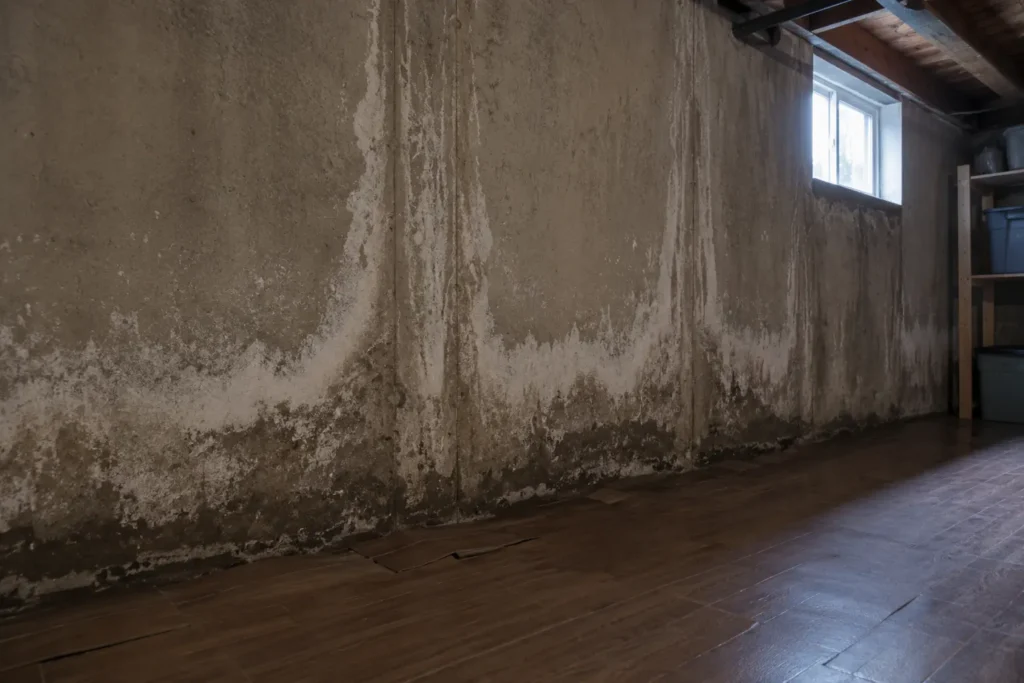
Water damage does not always announce itself with a visible flood. Many times the signs appear gradually – and by the time they become obvious – the damage behind the walls is already significant. Here is what to watch for –
- A musty or earthy smell in the basement – crawl space – or near exterior walls
- Efflorescence – white chalky mineral deposits – forming on basement walls
- Warped – soft – or discolored flooring – especially near walls or in corners
- Yellow or brown staining on ceilings after heavy rainfall
- Cracks developing along foundation walls or where walls meet the floor
- Sump pump cycling on and off continuously – even during dry weather
- Paint bubbling or peeling on lower sections of basement walls
If two or more of these signs are present at the same time – getting a professional moisture assessment done promptly is the right move. Early intervention consistently costs less than waiting.
What To Do the Moment Water Enters Your Home
The first 24 to 48 hours after water damage occurs are the most critical window. Here is the action plan that matters –
- Shut off electricity to the affected area immediately – especially if water is near outlets, panels, or appliances
- Stop the water source if it is a burst pipe or appliance failure – locate and close the main shutoff valve
- Remove valuables and furniture from the flooded area as quickly as possible
- Do not use a standard vacuum to remove water – use a wet/dry vac or contact a professional
- Document all damage with photos and video before any cleanup begins – your insurance claim depends on this
- Call a certified restoration company within the first few hours – from water extraction to structural drying, our water damage restoration services cover every step of the recovery process
Professional restoration teams use industrial dehumidifiers, air movers, and moisture meters to verify drying deep inside wall cavities and under flooring. DIY drying methods almost always miss hidden moisture – which leads directly to mold growth within days.
The Mold Risk That Follows Every Water Event
One reason fast professional response matters so much in Illinois is mold. In warm – humid conditions that follow spring and summer flooding – mold can begin establishing itself inside wall cavities and under flooring within 24 to 48 hours of initial water exposure.
Mold can begin establishing itself inside wall cavities and under flooring within 24 to 48 hours of initial water exposure. Once mold takes hold inside structural materials – it requires professional remediation rather than simple surface cleaning. This is exactly why complete and verified drying within the first 48 hours is not a recommendation – it is a necessity.
Once mold takes hold inside structural materials – it requires professional remediation rather than simple surface cleaning. This is exactly why complete and verified drying within the first 48 hours is not a recommendation – it is a necessity.
Choosing the Right Restoration Company in Illinois
Not every restoration company operates at the same standard. When evaluating options after water damage – look for these key qualifications –
IICRC Certification – The Institute of Inspection Cleaning and Restoration Certification sets the industry standard for drying protocols and equipment use. Always ask for proof before hiring.
24/7 Emergency Response – Water damage that sits overnight compounds significantly. Your restoration company must be reachable and deployable at any hour.
Transparent Written Estimates – Before work begins – get a detailed written scope that covers equipment, timeline, and total cost. Any company unwilling to provide documentation upfront is worth avoiding.
Insurance Claim Support – A reputable company will work directly with your insurance adjuster and provide the documentation your claim requires.
Protect Your Home Before the Next Storm Season
Prevention is always less expensive than restoration. Here are practical steps Illinois homeowners can take right now –
- Inspect your roof every spring – check for missing shingles, damaged flashing, and clogged gutters
- Know where your main water shutoff valve is – every adult in the household should know this location
- Test your sump pump before March and before October every year
- Check appliance hoses every six months – replace any showing stiffness or cracking
- Seal visible foundation cracks before heavy rain season begins
These steps take minimal time and cost – and can dramatically reduce both your risk and your out-of-pocket exposure when severe weather hits.
Final Thoughts – Illinois Homeowners Cannot Afford to Wait
Water damage in Peoria, Rockford, and Springfield is not a question of if – it is a question of when. The river systems, rainfall patterns, aging housing stock, and seasonal weather extremes across Illinois create conditions that make water intrusion almost inevitable at some point during homeownership.
What separates a manageable repair from a major reconstruction project is how quickly and correctly you respond. Know the warning signs – act immediately when damage occurs – and always work with a certified restoration professional who understands the specific challenges Illinois homes face.
If you need immediate help or want to understand your risk before the next storm – reach out to a local team that knows Illinois flooding conditions and responds the same day.
Leave a Reply