A burst pipe just flooded your kitchen. Or maybe Akron’s spring rains overwhelmed your basement again. The restoration crew is on their way but a burning question is already forming in your mind:
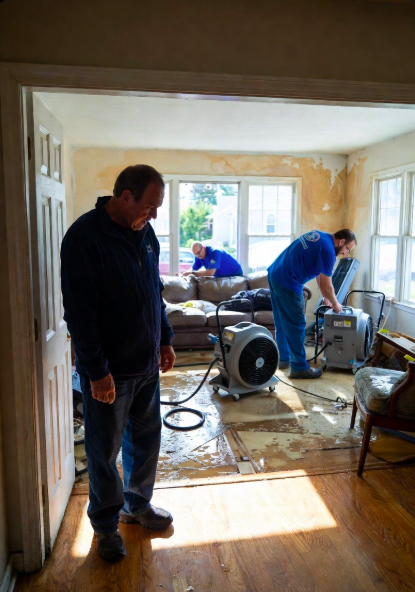
Do I have to leave my home, or can I stay?
It’s one of the most common questions Akron homeowners ask us, and the honest answer is: it depends. There is no one-size-fits-all rule. The right decision hinges on the type of water involved, how much of your home is affected, what restoration equipment is running, and whether your household includes vulnerable individuals like young children, elderly family members, or pets.
This guide walks you through every factor you need to consider so you can make a safe, informed decision without guessing.
The Short Answer: Sometimes Yes, Sometimes No
In minor water damage situations a small appliance leak, a contained ceiling drip, or a single wet room staying home is often perfectly reasonable. Restoration technicians can work around you, and the disruption to your daily life is manageable.
But in moderate to severe water damage situations, staying home can actually be dangerous. We’ll explain exactly why below.
Factor 1: The Category of Water Matters Most
Not all water damage is the same. The IICRC (Institute of Inspection, Cleaning and Restoration Certification) the industry standard-setting body for restoration professionals classifies water damage into three categories based on contamination level:
Category 1 — Clean Water This comes from sanitary sources: broken supply lines, overflowing sinks, or appliance leaks. The water itself poses minimal immediate health risk. If your damage is Category 1 and limited to one or two rooms, staying home is usually safe as long as the drying equipment isn’t creating unbearable noise or humidity levels.
Category 2 — Gray Water This water contains significant contamination think washing machine overflow, dishwasher leaks, or aquarium water. It may contain bacteria, chemicals, or organic matter. Extended exposure, especially for children or immunocompromised individuals, can cause illness. Staying home during Category 2 restoration is risky and generally not recommended.
Category 3 — Black Water This is the most dangerous. Black water includes sewage backups, rising floodwater from outside, or any water that has been sitting long enough to become grossly contaminated. It can contain E. coli, hepatitis A, and other serious pathogens. You should not stay in a home with active Category 3 contamination. This is non-negotiable.
If you’re not sure which category your water damage falls into, a professional assessment is the first step. Our team at Water Damage Akron performs free inspections and will give you an honest evaluation before any work begins.
Factor 2: How Much of Your Home Is Affected?
The scope of the damage directly impacts livability.
Small, contained area (one room or less) If a single bathroom or bedroom is affected and the rest of your home is dry and functional, staying home is usually viable. You can maintain your normal routine while technicians work in the damaged zone.
Multiple rooms or an entire floor When water has spread across multiple rooms or an entire level especially a finished basement the situation changes. Industrial air movers and dehumidifiers will be running constantly. The noise level can reach 65–85 decibels (similar to a vacuum cleaner running non-stop), and ambient humidity throughout the house will spike significantly during the drying process.
Structural areas like walls, subfloors, or ceilings When water has wicked into structural materials, technicians may need to open up walls, pull up flooring, or remove sections of drywall to dry the structure properly. Living in an active construction/remediation zone with exposed materials and heavy equipment is neither comfortable nor safe.
For Akron homeowners dealing with flooded basement cleanup, for example, the entire lower level of the home becomes a work zone often making it impractical to stay.
Factor 3: Is Mold Already Growing?
Here’s something Akron homeowners often don’t realize: mold can begin growing within 24 to 48 hours of water exposure, particularly in Ohio’s humid summers. Once mold is actively present, staying in the home becomes a genuine health concern especially for anyone with respiratory issues, allergies, or asthma.
Signs that mold may already be growing include:
- A musty, earthy odor in the affected area
- Visible dark spots or fuzzy growth on walls, ceilings, or flooring
- Family members experiencing new or worsening allergy symptoms
If black mold remediation is part of your restoration scope, the answer is almost always clear: vacate the affected areas at minimum, and ideally the entire home until remediation is complete and air quality testing confirms it is safe to return.
The EPA’s guide on mold and moisture recommends that occupants with health sensitivities relocate during active mold remediation work, regardless of the remediation scale.
Factor 4: Who Is In Your Household?
Even if the damage itself wouldn’t require you to leave, your household’s specific makeup matters.
Children under 5: Young children have developing immune systems and are more susceptible to airborne contaminants, VOCs from drying compounds, and elevated humidity levels. They also have less awareness of the hazards of open walls, exposed insulation, or restoration chemicals.
Elderly adults: Older family members are more vulnerable to airborne mold spores and bacteria associated with gray or black water events.
Pets: Dogs and cats are low to the ground and breathe air closer to wet flooring and baseboards. The chemicals used in antimicrobial treatments can be irritating or harmful to pets if they’re present during application.
Anyone with respiratory conditions: Asthma, COPD, or compromised immune systems are automatic factors in favor of temporary relocation.
If any of these apply to your household, we strongly recommend staying with family, a friend, or a hotel during the active phase of restoration even if the damage itself seems minor.
Factor 5: What Equipment Will Be Running?
Professional water damage restoration involves heavy industrial equipment that transforms your home’s environment significantly. Here’s what you can expect during active drying:
Air movers (high-velocity fans): These run continuously, 24 hours a day, often for 3–5 days. Multiple units may be placed throughout the affected area. Noise levels make sleep difficult, especially in adjacent rooms.
Commercial dehumidifiers: Large industrial dehumidifiers pull enormous amounts of moisture from the air. They generate significant heat raising room temperatures by 10–15°F and run constantly. Combined with closed-off rooms for containment, indoor conditions can become oppressive.
Negative air pressure machines / air scrubbers: Used when mold is present, these create negative air pressure in the work zone to prevent spores from spreading to other areas of the home. The constant hum and airflow can be difficult to live around.
Moisture meters and daily check-ins: Technicians will need access to the home daily, sometimes multiple times per day, to monitor drying progress and reposition equipment.
Bottom line: if you do stay home, understand that your living conditions will be significantly disrupted, and the “restoration zone” needs to be treated as a no-go area.
What to Do If You Decide to Stay Home
If the damage is contained, Category 1, and staying home is practical, here are some important guidelines:
Stay out of the work zone. Treat the affected area like an active job site. Don’t walk through it unnecessarily, especially during or after antimicrobial treatments.
Ventilate the rest of your home. Keep windows open in unaffected areas when weather permits to maintain fresh air circulation throughout the house.
Keep children and pets away from equipment. Industrial drying equipment poses safety hazards — tripping risks from power cords, burn risks from dehumidifier heat exhaust, and ingestion risks from residual cleaning chemicals.
Monitor your own health. If you or any family member develops headaches, eye irritation, coughing, or unusual fatigue during restoration, take it seriously. These can be signs of poor air quality or mold exposure.
Document everything for your insurance claim. If you’re staying home and observing the restoration process, take photos and videos daily. This documentation supports your insurance claim and protects you if disputes arise later.
Need help navigating the insurance side? Our flood damage cleanup team works directly with insurance adjusters and can help you document damage correctly from day one.
The Hidden Risk: Undetected Moisture in Walls and Floors
One of the most important reasons to hire certified professionals and to resist cutting the restoration process short is hidden moisture. Water travels through building materials in ways that aren’t visible to the naked eye. It wicks upward through drywall, spreads laterally beneath hardwood floors, and pools in subfloor cavities.
Professional technicians use pipe leak detection and moisture mapping equipment including thermal cameras and moisture meters to find and track water that you can’t see. If restoration is declared complete before all hidden moisture is eliminated, you will almost certainly face mold growth inside your walls within weeks.
This is one of the most common complaints homeowners have after DIY restoration attempts or after hiring unlicensed contractors who skip the moisture verification steps.
The IICRC S500 Standard for Professional Water Damage Restoration mandates that drying be verified with moisture readings before any restoration is considered complete not just based on how things “look and feel.”
How Long Will You Need to Be Displaced?
If you do decide to leave (or are advised to), here’s a realistic timeline:
| Damage Scope | Typical Drying Time | Total Restoration |
|---|---|---|
| Single room, Category 1 | 3–5 days | 1–2 weeks |
| Multiple rooms, Category 1–2 | 5–7 days | 2–4 weeks |
| Basement flood, Category 2 | 5–10 days | 3–6 weeks |
| Sewage backup / Category 3 | 7–14 days | 4–8 weeks |
| Structural damage requiring rebuild | Varies | 6–12 weeks+ |
These are estimates. Akron’s higher humidity levels during summer months can extend drying times compared to drier climates, since industrial dehumidifiers work harder to pull moisture from saturated air.
Your restoration team should give you a daily drying log and communicate clearly about projected timelines so you can plan accordingly.
A Note on Sump Pump Failures and Akron’s Spring Flooding
Akron homeowners are no strangers to spring flooding. The Cuyahoga River basin and Summit County’s clay-heavy soils mean that heavy rain events routinely push water into basements across neighborhoods like Fairlawn, Kenmore, and Highland Square.
One of the most overlooked causes of preventable water damage in Akron is sump pump failure. If your sump pump fails during a storm event whether from a power outage, a burned-out motor, or a stuck float switch you can have several inches of water in your basement within hours.
If that’s happened to you recently, our emergency sump pump installation and repair service can address the source of the problem alongside the restoration work so the same situation doesn’t repeat itself next storm season.
According to Summit County’s stormwater management resources, much of the county sits over ground with limited natural drainage capacity, making basement water intrusion one of the most common home damage events in the region.
When to Call a Professional Immediately (Don’t Wait)
Regardless of whether you plan to stay or go, these situations demand an immediate professional call — not a wait-and-see approach:
- Standing water anywhere in the home
- Water near electrical panels, outlets, or appliances
- Sewage or toilet overflow
- Water coming through the ceiling from above
- Any sign of structural sagging or compromise
- Water that has been sitting for more than 24 hours
Delays cost you. Every hour that water sits, it absorbs deeper into structural materials, increases the probability of mold, and raises your total restoration cost. FEMA’s guidance on flood damage consistently emphasizes that immediate action is the single most impactful factor in limiting flood-related losses.
The Bottom Line
Can you stay in your home during water damage restoration?
- Yes, likely — if the damage is minor, Category 1, contained to one room, and your household has no vulnerable members.
- Probably not — if damage spans multiple rooms, involves gray or black water, or if mold remediation is part of the scope.
- Definitely not — if sewage is involved, black mold has been confirmed, or structural materials are compromised.
When in doubt, ask your restoration team directly. A trustworthy, licensed contractor will give you an honest assessment not just tell you what’s convenient. At Water Damage Akron, we always walk homeowners through the realistic picture before work begins, so you can make the right call for your family.
Ready for a Free Inspection in Akron?
If you’re dealing with water damage right now or want a professional to assess a recent event our team is available 24/7 across Summit County. We respond within 60 minutes, and our free inspection comes with zero obligation.
📞 Call Water Damage Restoration Pros at
(312) 815-4144
Serving Akron, Fairlawn, Kenmore, Highland Square, Cuyahoga Falls, and all of Summit County.
Leave a Reply