Chicago and Cleveland sit 345 miles apart along the southern edge of the Great Lakes – and homeowners in both cities face water damage patterns that the rest of the country rarely deals with. Freeze-thaw cycling, lake-effect snow, hydrostatic basement pressure, and aging urban infrastructure create a Midwest water damage environment that is genuinely different from coastal flooding or desert flash floods.
As Chicago’s water damage specialists, we’ve spent 15 years working with the specific failure patterns that Lake Michigan’s climate creates in local homes. Our counterparts 345 miles east deal with the same fundamental forces – just with Lake Erie driving them. Understanding the similarities and differences helps Midwest homeowners in both markets make smarter decisions when water damage strikes.
The Freeze-Thaw Problem: What Happens Inside Your Walls Every Winter
Both Chicago and Cleveland sit in climate zones where temperatures regularly cross the freezing point multiple times throughout the winter season. This freeze-thaw cycling is not just uncomfortable — it is one of the most destructive forces acting on residential buildings in the Midwest.
Here is what happens structurally:
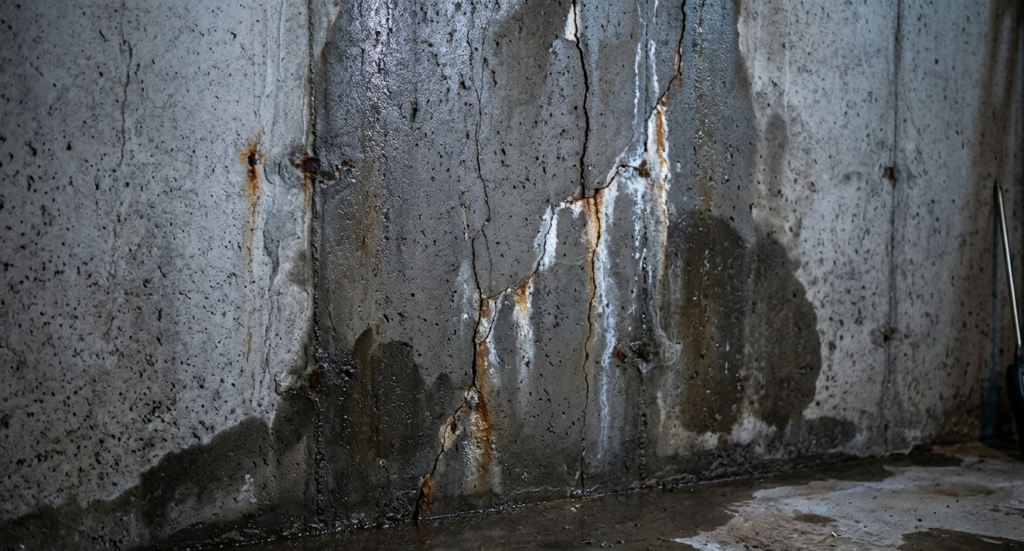
Water enters small cracks in masonry, mortar joints, concrete foundations, and around window and door frames during autumn rain events. When temperatures drop below freezing, that water expands by approximately 9% in volume as it becomes ice. That expansion exerts pressure on the surrounding material – pressure that can exceed 2,000 PSI in confined spaces. When temperatures rise again and the ice melts, the crack is now slightly larger than before. The next freeze cycle fills more volume, expands further, and widens the crack again.
Over a single Chicago or Cleveland winter, this process can turn a hairline foundation crack into a significant water intrusion pathway. Homeowners who address the interior water damage without addressing the crack source will experience the same event – often in the same location – the following spring.
The US Army Corps of Engineers’ Cold Regions Research and Engineering Laboratory has documented freeze-thaw deterioration as the primary long-term threat to concrete infrastructure in northern climates – the same mechanism that damages roads and bridges is working on your foundation every winter.
Lake Michigan vs. Lake Erie: Two Lakes, Two Damage Profiles
While both lakes drive lake-effect snow and sustained winter moisture, their geography creates different risk profiles for homeowners on their southern shores.
Lake Michigan (Chicago): Lake Michigan is deeper and longer, running north-south. Chicago sits on its southwestern shore, exposed to northerly and northwesterly winds that push lake-effect events directly into the metro area. Chicago’s water damage pattern skews toward:
- Sustained ice damming on low-slope and flat roofs common in the city’s older building stock
- Basement flooding from snowmelt saturation – Chicago’s clay-heavy soil has poor drainage capacity, and spring thaw events can saturate the ground faster than it can absorb or drain
- Sewer backup events from combined sewer overflow (CSO) – Chicago’s aging combined sewer system routes both stormwater and sewage through the same pipes, and heavy rain or rapid snowmelt can overwhelm the system, pushing sewage back into basement floor drains
Lake Erie (Cleveland): Lake Erie is the shallowest of the Great Lakes, which means it responds more quickly to wind events – building up storm surge and wave action rapidly. Cleveland sits on its southern shore, exposed to northerly winds that funnel directly into the metro. Cleveland’s water damage pattern skews toward:
- Rapid basement flooding from lake-effect events that deposit heavy snow followed by fast temperature swings and rapid melt
- Storm surge events affecting lakefront and near-lakefront properties during November-March wind events
- Freeze-thaw pipe failures in older housing stock – Cleveland’s residential neighborhoods contain a high concentration of pre-1960 construction where uninsulated or minimally insulated pipe runs in exterior walls are common
For Cleveland homeowners dealing with any of these events, certified specialists in the local market understand these specific failure patterns. Cleveland water damage restoration providers are structured for rapid basement extraction and freeze-thaw structural assessment – the capabilities that reflect Northeast Ohio’s distinct seasonal risk profile.
The Basement Is the Front Line
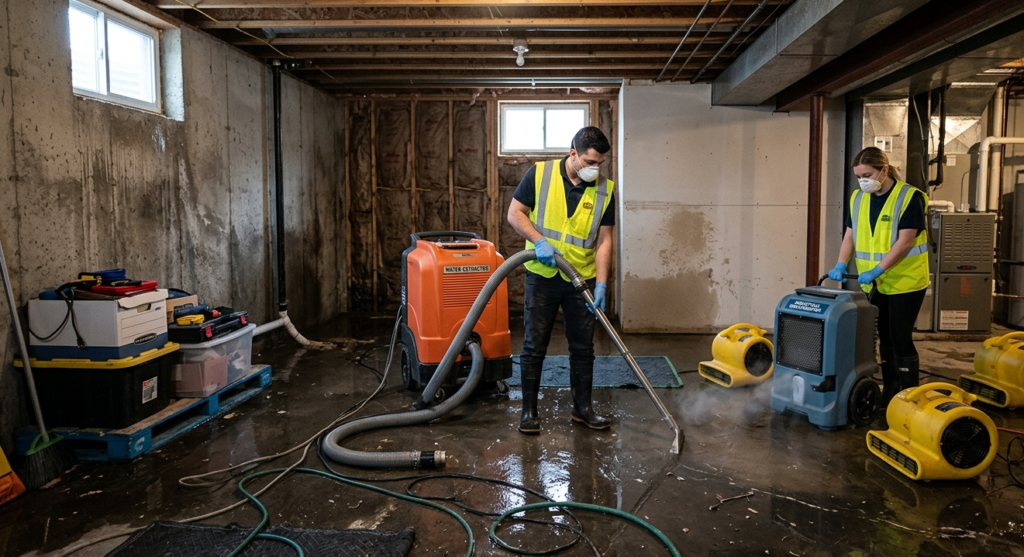
In both Chicago and Cleveland, the basement is where Midwest water damage most often begins and does the most damage. Both cities have high rates of older homes with:
- Block or poured concrete foundations with decades of freeze-thaw wear
- Sump pumps that may be undersized, aging, or lacking battery backup for power outage events
- Floor drains connected to combined or aging sewer systems
- Substandard or absent waterproofing on exterior foundation walls
When a significant rain event, rapid snowmelt, or sewer backup hits, the basement absorbs the first wave of damage. And because basements in both cities are frequently finished or used for storage, the content losses compound the structural restoration costs quickly.
The practical response hierarchy for a flooded Midwest basement:
- Confirm the electrical panel is safely accessible and kill power to the affected area before entering
- Identify the source – is this groundwater hydrostatic pressure, a sump pump failure, a sewer backup, or an interior pipe failure? The source determines whether the water is Category 1 (clean), Category 2 (grey), or Category 3 (black/contaminated)
- Call a certified restoration company – Category 3 events from sewer backup require full PPE protocols and antimicrobial treatment that go beyond standard water extraction
- Document everything before any content is moved
Ice Dams: Chicago’s Flat Roof Problem, Cleveland’s Sloped Roof Problem
Ice dams form when heat escaping through a roof melts snow on the upper sections, and that meltwater refreezes at the colder eaves and gutters – forming an ice barrier that traps subsequent meltwater and forces it back under shingles or roofing membrane.
In Chicago, the prevalence of flat and low-slope roofs on greystones, two-flats, and commercial buildings creates a variation of this problem: standing meltwater that cannot drain because gutters and drains are blocked by ice. The water sits on the membrane, finds any penetration or seam failure, and enters the building.
In Cleveland, the steeper-sloped roofs common in the city’s residential neighborhoods create classic ice dam formation at the eaves. The result is water infiltration at the top of exterior walls – staining ceilings, saturating insulation, and running down wall cavities to the floor below.
Both scenarios produce interior water damage that looks like a roof problem but is actually a combination of insulation, air sealing, and drainage failures. Addressing only the visible water damage without inspecting the roof assembly and attic insulation guarantees recurrence.
Pipe Failures: The 2am Emergency That Defines Midwest Winters
Burst pipes from freezing are a near-universal experience in Chicago and Cleveland’s older housing stock. The most vulnerable locations:
- Pipes in exterior wall cavities with insufficient insulation
- Pipes in unheated crawl spaces or garages
- Pipes running through attic spaces in older construction
- Supply lines to hose bibs on exterior walls that were not properly winterised
When a frozen pipe thaws and bursts, the damage accumulates at the rate of 100–500 gallons per hour depending on the pipe diameter and line pressure. A pipe that bursts at 2am and goes undiscovered until morning has typically released 600–4,000 gallons into the structure.
The response is the same regardless of volume: shut the main water supply, call your restoration company, and document before cleanup begins. The pipe repair is the plumber’s job. Everything the water touched after that is the restoration contractor’s scope.
What Both Cities Share: The IICRC Standard
Regardless of which Great Lakes city you are in, the professional standard for water damage restoration is the IICRC S500 Standard for Professional Water Damage Restoration. Any contractor working in Chicago or Cleveland should be IICRC-certified and provide:
- Daily drying logs with moisture readings for each affected material
- A defined drying goal (target moisture content for each material class)
- A final moisture clearance certificate before any rebuild work begins
- Category and class documentation for the water event
These documents protect your insurance claim and ensure the restoration was completed to an objective standard – not just until things look dry.
Conclusion
Lake Michigan and Lake Erie share a climate zone, a freeze-thaw problem, and a basement-first damage pattern. The specific mechanisms differ by city, by building type, and by season – but the response principles are the same: act fast, hire certified professionals, document everything, and fix the source before you rebuild.
Midwest homeowners have a shorter window between water intrusion and secondary damage than most of the country. In January, the heat running 24/7 in an affected structure accelerates drying – but it also accelerates mold in any moisture pocket the dehumidifiers haven’t reached. Speed and thoroughness are not competing priorities here. They are the same priority.
IL Water Damage Restoration Pros serves Chicago, IL and surrounding communities with 24/7 emergency response, flood extraction, structural drying, mold remediation, and sewage cleanup. IICRC-certified. Licensed and insured.
Call: (312) 815-4144
Leave a Reply