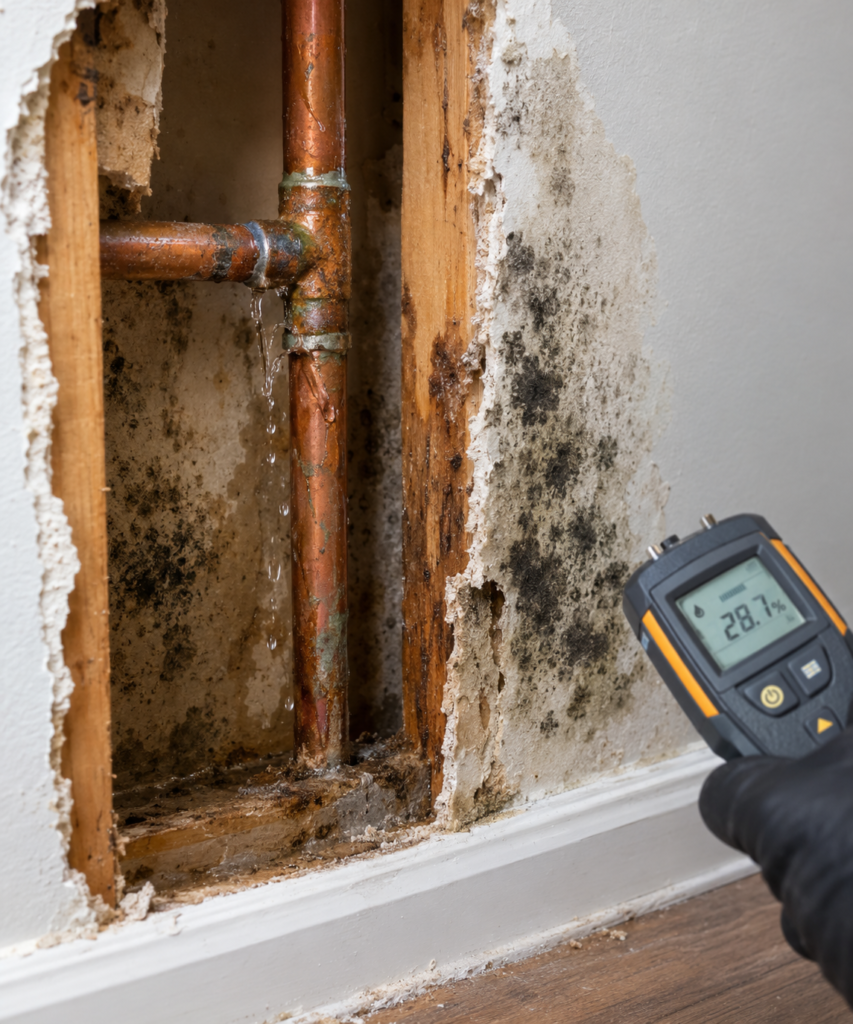
A small drip behind a wall rarely announces itself. There is no puddle on the floor, no dramatic spray, just a quiet, steady source of moisture inside a space you cannot see. Many Chicago homeowners only find out something is wrong weeks later, when a musty smell appears or a patch of paint starts to bubble.
So, can mold grow inside walls after a plumbing leak? Yes, it can, and it often does faster than people expect. This guide explains why walls are such a friendly environment for mold, how to spot the warning signs, and what to do if you suspect a hidden problem.
The Short Answer: Yes, and Quickly
Mold needs three things to grow: moisture, a food source, and a moderate temperature. A plumbing leak supplies the moisture. The wall cavity supplies the rest.
Mold growth can begin within 24 to 48 hours once building materials stay wet. That is why professionals treat the first two days after a leak as the critical window. If the materials are dried thoroughly in that time, mold usually never gets a foothold. If they stay damp, colonies can spread across drywall, wood framing, and insulation while the wall still looks perfectly normal from the outside.
Why Wall Cavities Are Ideal for Mold
Walls are almost purpose-built to hold onto moisture once it gets in. Several features work against you:
- Drywall paper is food. The paper facing on drywall is organic and absorbs water easily. Mold feeds on it.
- Wood studs and sill plates are also organic and can hold moisture for a long time.
- Insulation traps water. Fiberglass and cellulose soak up moisture and dry very slowly.
- There is little airflow. A closed cavity has almost no ventilation, so damp air just sits there.
- It is dark. Mold does not need light, and a wall cavity offers plenty of darkness.
Chicago adds its own complications. Older bungalows, greystones, and two-flats often have aging supply lines and cast iron drain pipes. Cold winters also stress plumbing, and a pipe that freezes and cracks can leak into a wall for days before anyone notices. Our article on midwest water damage and freeze-thaw cycles explains how this plays out across the Great Lakes region.
What Kinds of Plumbing Leaks Cause Hidden Mold?
Not every leak is equal. Some of the most common culprits behind wall mold include:
- A slow pinhole leak in a copper supply line
- A loose or failing connection behind a shower, tub, or sink
- A cracked drain line inside a wall
- A burst pipe after a hard freeze, even if you cleaned up the visible water
- A leaking washing machine hose or dishwasher line
- Condensation dripping from poorly insulated pipes
Slow leaks are often more dangerous than dramatic ones. A burst pipe gets attention immediately. A slow drip can feed mold for months. If you have already dealt with a major leak, our guide on how to minimize water damage after a pipe leak covers the steps to take right away.
Warning Signs of Mold Inside Your Walls
Because you cannot see inside the wall, you have to watch for indirect clues. Pay attention to:
- A musty or earthy smell that gets stronger in one room or near one wall
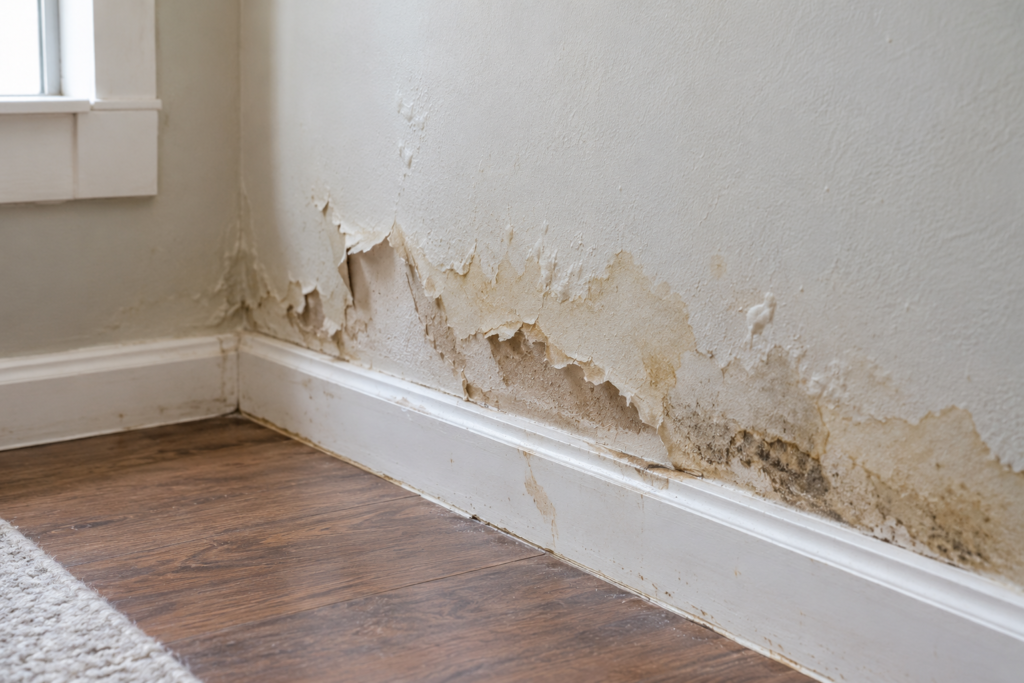
- Discoloration such as yellow, brown, or dark stains on walls or ceilings
- Bubbling, peeling, or cracking paint or wallpaper
- Soft, warped, or crumbling drywall when you press on it gently
- Visible mold spots near baseboards, corners, or outlets
- Condensation or a persistent damp feeling on a wall surface
- Unexplained increases in your water bill, which can point to a hidden leak
- New allergy-like symptoms at home, such as coughing, sneezing, or itchy eyes that improve when you leave
One sign alone does not prove mold is present, but a combination of two or three deserves a proper inspection.
Health and Property Risks
Mold is more than a cosmetic issue. According to the CDC, exposure to mold can trigger nasal stuffiness, throat irritation, coughing, and wheezing, and people with asthma, allergies, or weakened immune systems can react more strongly. Children and older adults are also more sensitive.
For your property, the risks build over time. Wood framing can weaken, drywall can crumble, and finished surfaces can be ruined. The longer moisture remains, the larger the repair becomes. Catching a leak early often means the difference between a quick drying job and opening up an entire wall.
What to Do If You Suspect a Leak Behind a Wall
If you think water is getting into a wall, act in this order:
- Shut off the water. Close the main valve or the fixture shutoff to stop the source.
- Turn off electricity if water is near outlets or wiring. Safety comes first.
- Ventilate and dry what you can reach. Run fans, open windows when weather allows, and use a dehumidifier if you have one.
- Document everything. Take photos and notes before anything is moved. This helps with insurance later.
- Do not cut into the wall yourself. Disturbing mold can release spores into the air and spread contamination.
- Call a professional quickly. Our 24 hour emergency response team can begin assessing moisture right away.
How Professionals Find and Fix Mold in Walls
A trained restoration team does not guess. The process typically looks like this.
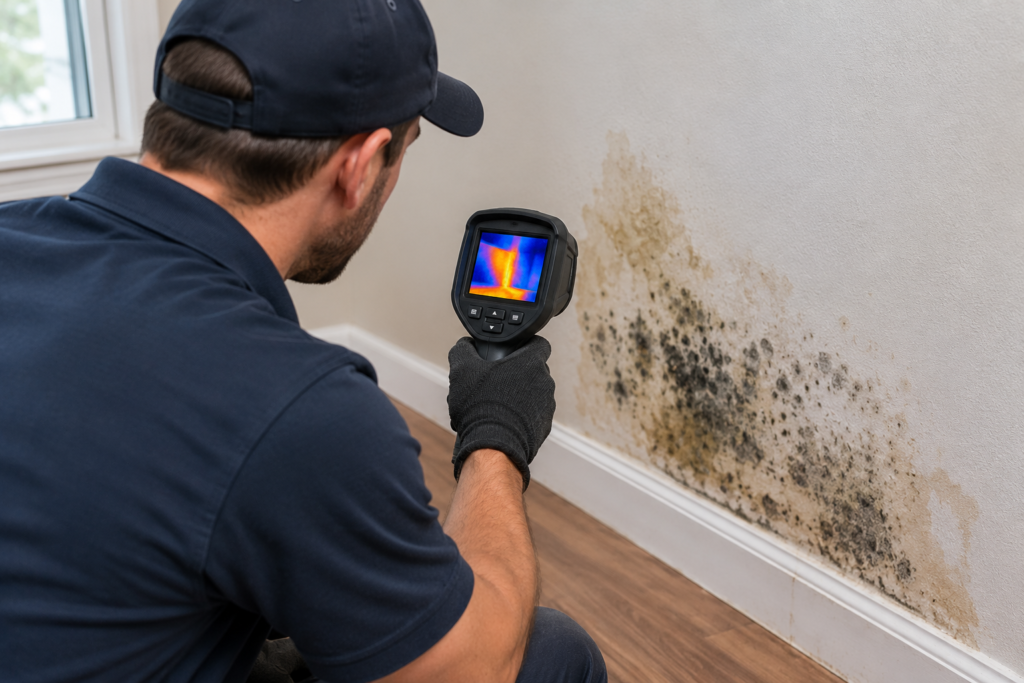
Locating the moisture. Technicians use moisture meters and thermal imaging to map where water has traveled, often finding wet areas far from the visible stain. This is the focus of our moisture detection inspection service. If the source itself is still unknown, leak detection and repair helps pinpoint it before restoration begins.
Containing the area. If mold is confirmed, the work area is sealed off with containment barriers and negative air pressure so spores do not drift into the rest of your home.
Removing damaged materials. Porous materials that are mold-damaged, like soaked drywall or insulation, generally cannot be cleaned and must be removed. Our drywall removal and replacement service handles this safely. Structural wood can usually be cleaned and treated rather than replaced.
Cleaning and treating. HEPA vacuuming, surface cleaning, and an antimicrobial treatment help remove remaining spores and discourage regrowth.
Drying completely. Industrial air movers and dehumidification services bring the structure back to normal moisture levels. Skipping this step is the most common reason mold returns.
Rebuilding. Once everything is dry and verified, walls are repaired and finished so the space looks like new.
For a deeper look at the full process, see our mold remediation services page. If the leak came from a frozen or broken line, our burst pipe cleanup service addresses the water damage and the mold risk together.
Will Insurance Cover Mold From a Plumbing Leak?
Coverage varies a lot. Many homeowners policies cover mold that results from a sudden, accidental leak, such as a burst pipe, but may exclude mold caused by long-term seepage or neglected maintenance. Policies also differ on limits for mold remediation. Read your policy carefully, document damage early, and report the loss promptly. If you want help navigating the paperwork, our insurance claim assistance team can walk you through it.
How to Prevent Mold After Future Leaks
You cannot prevent every plumbing failure, but you can lower the odds of hidden mold:
- Inspect under sinks, behind toilets, and around appliances every few months.
- Replace aging supply hoses, especially on washing machines, every five to seven years.
- Insulate exposed pipes in unheated areas before winter.
- Keep indoor humidity below about 50 percent.
- Run bathroom exhaust fans during and after showers.
- Fix small drips right away instead of waiting.
- Dry any wet area within 24 to 48 hours.
Frequently Asked Questions
How long does it take for mold to grow in a wall after a leak?
Growth can start within 24 to 48 hours if the materials stay wet, though visible signs may take days or weeks to appear.
Can mold grow inside walls without being visible?
Yes. Mold often develops on the back of drywall or inside the cavity long before anything shows on the surface.
Is it safe to stay in the house?
Minor, localized mold may not require leaving, but if anyone has asthma, allergies, or a weakened immune system, or if the contamination is widespread, it is wise to get professional guidance first.
Can I just spray bleach on it?
It is not recommended. Bleach does little for porous materials, and the underlying moisture problem remains. Proper drying and removal matter far more.
Final Thoughts
Mold can absolutely grow inside walls after a plumbing leak, and because it hides so well, it is easy to underestimate. The good news is that speed makes a huge difference. Stopping the water, drying thoroughly within the first couple of days, and getting an expert inspection when something seems off can save you from major repairs.
If you are in Chicago or the surrounding suburbs and suspect a hidden leak or mold behind a wall, IL Water Damage Restoration Pros is ready to help. Call (312) 815-4144 or contact us online for a free quote, or check our areas we serve to confirm coverage in your neighborhood.
Leave a Reply